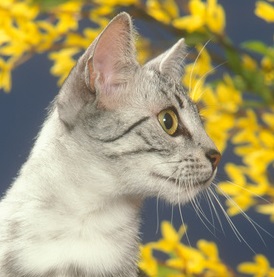
 All happened as I foretold. I was brought to this place by my lady Moll, who set forth with her husband.
I heared tell that they would journey to the manor where I was born, and live in the house there.
Grieved as I was to leave my sweet friend Smokie, I was cheered by the thought that I might see my sister. Oh, I prayed she were still in this world, and had kept her place in the stable.
So when I and my basket was put in my crate, and onto a cart with the two little dogs (as happened before) I did not complain overmuch.
The weather was fair and the road firm. We made good speed, and came hither to rest ourselves. The dogs ran into the house where my lady Moll and her husband would pass the night, but I was lodged in the stable with the horses and took my supper there.
After I had rested, I had a mind to ease myself (I did not wish to soil the straw in my crate) and to see the house also. I tried the lid of my crate. It yielded a little, and I guessed that it was not tied tight.
With much effort I loosed the lid enough to climb out, and stepped into the yard to take the scents. Some were most pleasant. I arrkst myself if I had been here before, mayhap on my last voyage or with my young lord when I was a kitling.
I walked until I saw the towers of the gatehouse before me, but did not call for admittance. Instead, I made a general survey from without, and found the house right statelie. Though not, I think, so big as the house we had come from.
 Then I went into the garden and leapt onto the wall to look over. I saw two young she-cats (not yet grown to be queens) frolicking in a meadow.
But (can you credit it?) when they saw me watching, one called, “Hello, sweet-heart,” and the other, “Give us a sniff.” Then they ran off very merry, believing theirselves to be wittie.
I have never been spoke to in that wise in all my days.
Smokie had taught me a word or two for such lewd chits that he learnt in his shop, so I followed them to tell them what I thought of their strumpetry.
They fled into a wood where they gave me the slip. Then what do I hear but a man and his dog, so I ran up a tree for safety. There I passed the night most peaceable, with nowt but owls for companie.
When morning came I saw I was a long way from the house, but I followed the smell of the smoke from its chimneys, and so returned to the yard.
I could not find our carts.
I went to the stable. Our horses were not there. Nowt but my crate remained.
I ran out again and looked toward the house, but I knew that all were gone. They had left me.
I arrkst the horses who dwelt in that stable, “What place is this?”
“Say now,” one sayt. “What place is this?”
“Nay,” sayt another. “It is the place.”
“Yea,” sayt all. “It is the place.”
I am accustomed to the ways of horses, so had patience. I sayt, most civil, “Friends, I know it is the place, but what place is it? Do it have a name?”
“Nay,” sayt all. “It is the place.”
So I left the lackwits where they stood, and followed my nose to the kitchen.

 Gib’s first recorded journey is in 15: We Go Our Ways. That was from Itchel Manor in Hampshire (“the manor where I was born”) to Cowdray House in West Sussex. His second journey seems to have brought him back to Hampshire.

If we take the horses’ word for it, he’s been left at Place House (or The Place). Formerly Titchfield Abbey, it was acquired in 1537 by Thomas Wriothesley, later 1st Earl of Southampton (and grandfather to Gib’s young Earl). By the early 1540s he’d converted the Abbey into an impressive house.
There’s more about both Abbey and House here on the English Heritage website, including a picture of what the House may have looked like when Gib walked around the exterior, making his “survey”. However, I’m not aware of any historical evidence that any of Shakespeare’s plays was first performed there, as the website suggests.
Let’s hope Gib can cast some light on the matter.
 The Earl of Southampton's Cat